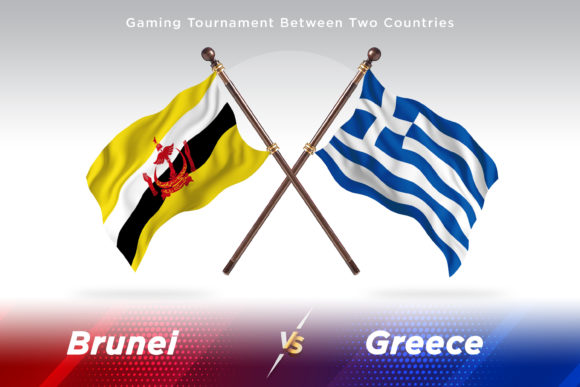
Brunei Versus Greece: A Comparative Look at Their Flags and the Significance of Official Country Flags
Flags are more than just colorful pieces of cloth; they represent identity, history, and values. In this article, we’ll explore the flags of two culturally rich and geographically distinct countries — Brunei and Greece. We'll compare their designs, meanings, and symbolism while also delving into the broader concept of official country flags in today’s world. Whether you're a graphic designer working with flag illustrations or simply curious about national symbols, understanding these nuances can add depth to your knowledge and creativity.
The Flag of Brunei: A Symbol of Islamic Heritage and Monarchy
The National Flag of Brunei Darussalam, known locally as "Lambang Negara," is a proud emblem of the Sultanate's rich cultural and religious heritage. It features a white crescent moon and star centered on a red field, surrounded by a yellow border. The red color represents the blood of those who died for the nation, while the white symbolizes peace and purity. The yellow border signifies the sovereignty of the sultan, reflecting the deep connection between the monarchy and the state.
Interestingly, the design of the Brunei flag has evolved over time. The current version was adopted in 1959 and is based on the royal banner of the Sultan. The crescent and star are traditional symbols of Islam, which is the official religion of Brunei. This combination not only highlights the country's religious identity but also its political structure under a constitutional monarchy.
Key Elements of the Brunei Flag
- Red Field: Represents bravery and the sacrifices made by the people of Brunei.
- White Crescent and Star: Reflects the country's Islamic faith and unity under one ruler.
- Yellow Border: Embodies the sovereignty of the Sultan, emphasizing his central role in governance.
The Flag of Greece: Ancient Roots and National Pride
In contrast to Brunei’s flag, the flag of Greece draws inspiration from ancient times and embodies a long-standing tradition of democracy and resilience. The Greek flag consists of nine horizontal stripes alternating between blue and white, with a white square in the upper hoist corner bearing a blue cross. The colors represent the sky (blue) and the sea (white), both essential elements of Greece's geographical and historical identity.
According to legend, the nine stripes stand for the nine syllables of the Greek word “Eleftheria” (freedom). However, it's more commonly accepted that the design reflects the influence of the French tricolor, modified to suit Greek culture. The blue cross on the white square is believed to have been inspired by the Byzantine flag and the Orthodox Christian faith, which plays a significant role in Greek society.
Symbolism Behind the Greek Flag
- Blue Stripes and Square: Represent the Aegean Sea and the sky, vital parts of Greece's natural landscape.
- White Stripes and Cross: Stand for purity, peace, and the legacy of Greek civilization.
- Overall Design: Evokes the struggle for independence and the enduring spirit of the Greek people.
Comparing the Two: Brunei vs. Greece
While both flags serve as powerful symbols of national identity, the differences in their design and symbolism reflect the unique histories and cultures of each country. The Brunei flag emphasizes the role of the monarchy and Islamic traditions, whereas the Greek flag celebrates democratic ideals and historical continuity.
One of the most noticeable contrasts is the use of color. Brunei uses bold red and white with a yellow border, creating a strong visual presence. Greece opts for a subtler palette of blue and white, invoking a sense of calm and serenity. Both flags, however, share a common element — the prominence of celestial symbols like the crescent moon and cross, underscoring the importance of spirituality in both nations.
Design and Layout Differences
- Brunei Flag: Vertical layout with a central emblem, designed for royal and governmental representation.
- Greek Flag: Horizontal stripes with a diagonal cross, ideal for maritime and civilian display.
- Cultural Emphasis: Brunei focuses on monarchy and Islam, Greece on democracy and classical heritage.
Understanding the Broader Concept of Official Country Flags
National flags are not just decorative emblems; they carry deep significance in international relations, education, media, and everyday life. They are used to identify sovereign states, foster patriotism, and serve as tools for communication and diplomacy. For example, when athletes compete in the Olympics, they wave their country's flag to show pride and allegiance.
In the digital age, flags are also widely used in branding, web design, and marketing. High-quality flag illustrations, such as 3D waving position flags isolated on individual layers, are becoming increasingly popular among designers. These files allow for greater flexibility in editing and integrating flags into various projects without compromising quality or accuracy.
Practical Uses of Isolated Flag Layers in Design
For designers, having access to a PSD file with each flag on its own layer opens up new possibilities. Here are some practical applications:
- Graphic Design: Easily customize flags for presentations, posters, and infographics.
- Web Development: Incorporate flags into websites or apps for regional content identification.
- Marketing Campaigns: Create visually appealing materials featuring multiple countries without complex edits.
- Education: Use flags in teaching geography, history, or global awareness in classrooms or online courses.
When using an illustration package that includes flags in JPEG and PNG formats, it's important to ensure the flags are accurate and respectful. Many such bundles include official country flags from all over the world, making them valuable resources for professionals and enthusiasts alike.
Why Flags Matter in Modern Life
In today's interconnected world, flags play a crucial role in identifying cultural and political affiliations. They are often the first thing people notice when learning about a new place or representing it in a creative project. Flags also help maintain a sense of belonging and national pride, especially during global events or crises.
Moreover, in business and education, flags are used to denote language preferences, geographic regions, and international partnerships. A well-organized flag illustration set can streamline these processes significantly. With smart objects enabled in PSD files, users can edit the flags easily, ensuring that their designs remain professional and relevant.
Flags in Technology and Creativity
Modern technology has revolutionized how we use and perceive flags. From animated flags in video games to augmented reality experiences where users interact with virtual flags, there's no shortage of innovative ways to incorporate them into digital media. The availability of high-resolution flag illustrations allows developers and artists to bring authenticity and detail to their work.
For educators, flags are invaluable in teaching children about the world. By using clear, well-labeled flag images, students can better understand different countries and their identities. Similarly, businesses may use flags in multilingual interfaces or to indicate product availability in different regions.
Choosing the Right Flag Illustration Set for Your Project
If you're working on a design project involving flags, selecting the right illustration set is key. An ideal set should include:
- High Resolution: Such as 4500 x 3000 px, to ensure clarity and scalability.
- Multiple File Formats: Including JPEG, PNG, and preferably PSD for layered editing.
- Smart Objects: To allow easy customization without distorting the original image.
- Well-Organized Layers: Each flag on a separate layer with proper naming for efficient workflow.
These features make it simple to integrate flags into a wide range of design projects, from print media to interactive web platforms. If your project requires additional flags beyond what's included in the set, many providers offer the option to request specific flags, ensuring your design remains comprehensive and inclusive.
Conclusion: Celebrating Diversity Through Flags
Whether you're designing a presentation or studying the history of nations, understanding the flags of Brunei and Greece provides insight into their respective cultures. The Brunei versus Greece flags comparison reveals how deeply national symbols can reflect the soul of a country. As we continue to embrace globalization and digital innovation, the role of flags in our lives will only grow in importance.
By using high-quality flag illustrations, you can create compelling visuals that honor the diversity of our world. These tools not only enhance your work but also contribute to a deeper appreciation of the many countries that make up our global community.
Final Thoughts
Flags are universal symbols of identity and unity. They connect us to our past, guide us in the present, and inspire us for the future. Whether you're a designer looking to improve your workflow or someone eager to learn more about the world, exploring the flags of Brunei and Greece offers a fascinating journey into the heart of two distinct yet equally rich nations.