Brunei vs. Cambodia: A Comparative Overview of Two ASEAN Nations
The Association of Southeast Asian Nations (ASEAN) is a dynamic group of countries that plays a significant role in the economic and cultural development of the region. Among these nations, Brunei and Cambodia stand out due to their unique histories, cultures, and modern-day identities. While both are members of ASEAN, they differ greatly in terms of geography, governance, economy, and societal structure. This article provides an in-depth comparison between Brunei and Cambodia, focusing on their official flags, political systems, economies, and how they fit into the broader context of Southeast Asia today.
The Official Flags of Brunei and Cambodia
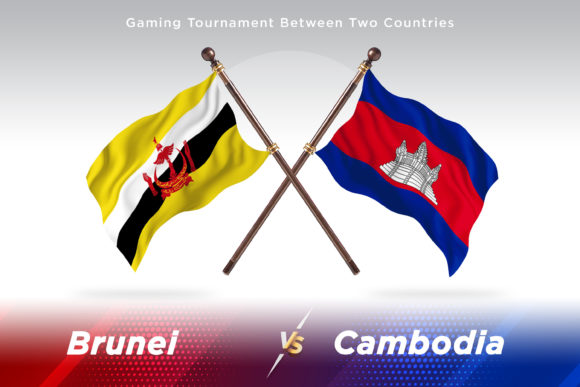
A country’s flag is more than just a symbol—it represents its history, values, and identity. The flags of Brunei and Cambodia reflect their distinct national characters.
Brunei Darussalam's Flag
The flag of Brunei, also known as the "Duli Pengiran," consists of four main elements: the crescent moon, the sun with rays, the black and white colors, and the red border. The flag features a white crescent and star over a black field, enclosed within a red border. These symbols represent Islam, the official religion of Brunei, and the sovereignty of the nation. The white color signifies peace and purity, while the red border symbolizes courage and bravery. The overall design reflects the sultanate's Islamic heritage and royal authority.
Cambodia's Flag
In contrast, the flag of Cambodia is a horizontal tricolor of blue, red, and green, with three golden stars in the center. The blue stripe stands for the monarchy and peace, the red for the blood spilled during the struggle for independence, and the green for the fertility of the land. The three stars represent the three regions of the country: the Kingdom of Cambodia, the Khmer Republic, and the People’s Republic of Kampuchea. The Cambodian flag is rich in symbolism and serves as a reminder of the country’s tumultuous past and resilient spirit.
Both flags are often used in international settings, such as country flags illustrations or flags versus background concepts. For designers working with official country flags from all over the world, it is essential to maintain the integrity of each flag’s design and meaning. When creating 3D waving positions for these flags, attention to detail ensures that the representation is respectful and accurate.
Geography and Demographics
Understanding the geography and demographics of Brunei and Cambodia is key to appreciating their differences and similarities.
Brunei's Geography and Population
- Location: Brunei is a small sovereign state located on the island of Borneo, bordered by Malaysia.
- Area: It covers approximately 5,765 square kilometers, making it one of the smallest countries in Southeast Asia.
- Capital: Bandar Seri Begawan is the capital city and the only major urban center in the country.
- Population: With a population of around 460,000 people, Brunei is sparsely populated, boasting one of the lowest population densities globally.
Cambodia's Geography and Population
- Location: Cambodia is a mainland Southeast Asian country situated between Thailand, Vietnam, Laos, and the Gulf of Thailand.
- Area: It spans about 181,035 square kilometers, significantly larger than Brunei.
- Capital: Phnom Penh is the capital and largest city, serving as the political, economic, and cultural hub of the nation.
- Population: With over 17 million people, Cambodia has a much higher population density and a diverse mix of ethnic groups and languages.
These geographical and demographic differences influence everything from economic policies to social structures in both countries.
Political Systems and Governance
Brunei and Cambodia have different political systems shaped by their historical backgrounds and current leadership styles.
Brunei's Political System
Brunei is a constitutional monarchy governed under the rule of the Sultan and Yang Di-Pertuan Negara, currently Sultan Hassanal Bolkiah. The Sultan holds executive power and is the head of state and government. The country operates under a dual system of governance, where traditional Malay Islamic law coexists with civil law. This unique blend of governance emphasizes stability and continuity, which has been a hallmark of Brunei’s political landscape since gaining independence from the United Kingdom in 1984.
Cambodia's Political System
Cambodia is a constitutional monarchy with a parliamentary system. The King, Norodom Sihamoni, serves as a ceremonial figurehead, while the Prime Minister holds the majority of executive power. The ruling party, the Cambodian People’s Party (CPP), dominates the political scene. Since the end of the Khmer Rouge era, Cambodia has made efforts to establish democratic institutions, although challenges remain in ensuring full political freedom and transparency.
While both countries have monarchs, the actual political power and governance style differ substantially. In design contexts such as flags versus background illustrations, these nuances can be subtly conveyed through visual storytelling.
Economic Structures and Development
Economically, Brunei and Cambodia present contrasting scenarios, influenced by natural resources, foreign investment, and domestic policies.
Brunei's Economy
Brunei’s economy is heavily reliant on oil and gas exports, thanks to its vast reserves beneath the Borneo soil. The government owns most of the energy sector, and revenues from this industry fund public services and infrastructure. As a result, Brunei enjoys one of the highest GDP per capita in the world, with citizens benefiting from generous welfare programs. However, this dependence on hydrocarbons makes the economy vulnerable to global price fluctuations.
Cambodia's Economy
Cambodia’s economy is more diversified, with agriculture, manufacturing, and tourism playing key roles. The garment industry is particularly significant, contributing a large portion of the country’s export earnings. Tourism is another vital sector, driven by attractions like Angkor Wat and the Mekong River. Despite progress, Cambodia still faces economic challenges such as poverty, corruption, and a lack of skilled labor. Its development strategy focuses on attracting foreign investment and improving education and infrastructure.
For businesses and designers using official country flags from all over the world, understanding the economic climates of these countries can provide valuable context when representing them visually or discussing their global significance.
Cultural and Social Differences
Culture plays a crucial role in shaping a nation’s identity. Brunei and Cambodia both have deep-rooted traditions but express them differently.
Brunei's Culture
Brunei is predominantly Muslim, and Islamic customs are deeply embedded in daily life. The country promotes a conservative lifestyle, with strict laws governing behavior, dress code, and religious practices. Traditional Malay culture is preserved through festivals, music, and dance, such as the famous Kuda Kepang performance. Education and family values are highly emphasized, and the government supports initiatives to promote cultural heritage.
Cambodia's Culture
Cambodia has a rich cultural heritage rooted in Theravāda Buddhism, which influences many aspects of life. Temples, monks, and Buddhist rituals are common throughout the country. Cambodian culture is also characterized by traditional arts, including classical dance and music, and the celebration of events like the Water Festival and Pchum Ben. Despite facing hardships in its history, Cambodia continues to preserve and celebrate its cultural legacy.
When incorporating flags versus background designs into educational materials or creative projects, highlighting these cultural distinctions can enhance the viewer’s understanding of each country’s essence.
Modern Life and Global Integration
Both Brunei and Cambodia are part of the global community, yet their approaches to modernization vary.
Brunei's Modern Life
Brunei offers a high standard of living, with excellent healthcare, education, and housing provided by the government. The country is relatively isolated in terms of media and internet access, with some restrictions in place to protect cultural and religious values. Urban planning is modern, and there is a strong emphasis on maintaining a balance between tradition and technological advancement.
Cambodia's Modern Life
Cambodia is experiencing rapid modernization, especially in urban areas. The rise of technology, e-commerce, and digital communication is reshaping how Cambodians live and work. However, rural communities still rely heavily on agriculture and face limited access to modern amenities. The government is actively promoting tourism and economic growth, aiming to integrate more fully into the global market.
As part of the Official Country Flags from all over the world collection, these two flags serve not only as national symbols but also as markers of each country’s position in the contemporary world.
Practical Relevance of Flags in Design and Business
Flags play a practical role beyond symbolism—they are essential in branding, marketing, and graphic design. Whether you're designing for a multinational business or a cultural event, having access to high-quality, officially accurate flags is crucial.
Designers who use tools like Photoshop will appreciate the value of a well-organized file, such as a 1 PSD 4500 x 3000 px document with each flag isolated on its own layer. This format allows for easy customization and editing via smart objects. Additionally, the inclusion of JPEG and PNG files ensures flexibility for various applications, from print to web-based content.
Such design assets are invaluable for creating engaging presentations, infographics, or promotional materials that include multiple countries. They help maintain clarity and professionalism, especially when dealing with flags versus background compositions or illustrating concepts like cultural diversity and international cooperation.
Conclusion
Brunei and Cambodia may share a regional identity through their membership in ASEAN, but they are distinct in their political systems, economies, and cultures. Their flags, while differing in design and symbolism, represent the core values and histories of their respective nations. Understanding these differences not only enriches our knowledge of Southeast Asia but also helps us appreciate the importance of accurate and meaningful representations in design and education.
Whether you’re a designer seeking to incorporate official country flags into your next project or a student studying the region, recognizing the unique characteristics of Brunei and Cambodia adds depth to your work and insights. By leveraging well-structured design files—such as those with editable smart objects and organized layers—you can create compelling visuals that honor the identities of these two fascinating countries.