Brazil Versus Brunei: A Comparative Illustration of Two National Flags
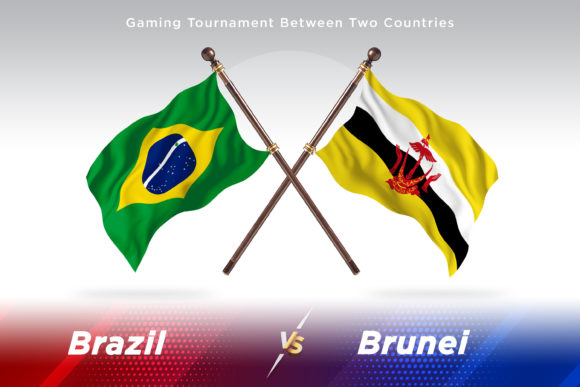
The concept illustration titled “Brazil Versus Brunei Two Flags” offers a compelling visual comparison between the national flags of two distinct countries. Brazil, a vibrant South American nation known for its cultural diversity and natural beauty, and Brunei, a small but affluent Southeast Asian sultanate, each have unique flags that reflect their history, values, and identity. This article explores the design elements, symbolism, and real-world applications of these flags, particularly in the context of an isolated background 3D waving illustration format.
Understanding the Design Elements of Each Flag
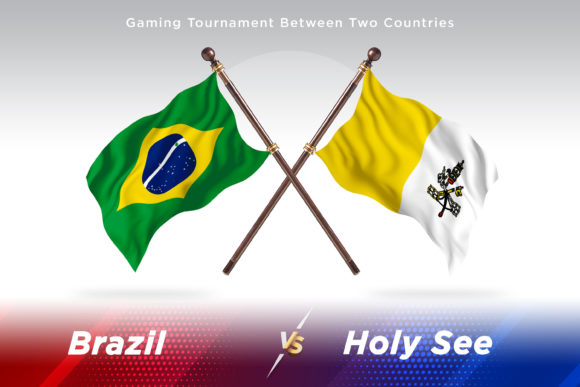
The Brazilian flag is instantly recognizable with its green field, a large yellow diamond, and a blue circle containing a white band and stars. The colors hold deep historical significance: green symbolizes the House of Braganza, yellow represents the country's wealth in gold, and blue signifies the sky over Rio de Janeiro when the flag was first raised. The 27 white five-pointed stars inside the blue circle represent the constellations of the Southern Cross and the states of Brazil, while the central white banner features the national motto “Ordem e Progresso,” meaning “Order and Progress.”
In contrast, the Bruneian flag is a more minimalist design. It consists of four white crescent moons and four white stars on a red field, with a yellow crescent at the center. The red color stands for bravery and strength, while the white symbolizes peace and purity. The yellow crescent is a nod to the Sultanate of Brunei and represents Islam, which is the official religion of the country. The four stars and crescents are said to represent the four pillars of the state: justice, unity, peace, and prosperity.
Comparative Visual Appeal and Symbolism
When viewed side by side in a 3D waving position, the flags of Brazil and Brunei highlight not only their aesthetic differences but also their contrasting cultural narratives. Brazil’s flag is dynamic and rich in color, evoking a sense of movement and vibrancy. Its complex layout suggests a nation with a diverse geography and a multifaceted society. On the other hand, Brunei’s flag appears serene and structured, reflecting the stability and traditional governance of the country.
Such a visual comparison can serve as an educational tool for audiences interested in geopolitics, history, or graphic design. The illustration helps demystify the meanings behind flag designs, offering insight into how nations express their identities through national symbols.
Practical Applications of the “Brazil Versus Brunei Two Flags” Concept
Concept illustrations featuring country flags are widely used across various industries. In marketing and branding, they help businesses communicate their global reach or cultural relevance. Educators use them to teach geography and political science in engaging ways. Designers and illustrators leverage such visuals to create informative infographics, presentations, and digital content that stand out in competitive markets.
The “Brazil Versus Brunei Two Flags” illustration is especially useful in contexts where visual storytelling is key. For instance, it could be incorporated into:
- Travel brochures comparing destinations in different continents.
- Cultural exhibitions showcasing contrasts in national identity and heritage.
- Political analyses discussing diplomatic relations between South America and Southeast Asia.
- Educational materials highlighting flag symbolism in social studies curricula.
- Graphic design templates for users who want to customize layouts for websites, posters, or reports.
Advantages of Using Layered Flag Illustrations
A major advantage of the “Brazil Versus Brunei Two Flags” illustration is its layered structure. With each flag placed on its own layer and clearly labeled, designers gain complete control over individual components. This allows for easy editing, repositioning, and even swapping one flag for another without affecting the rest of the composition.
The inclusion of smart objects further enhances usability. Whether you're resizing the flags for a logo or adjusting their positions for a presentation slide, smart objects ensure that the quality remains intact. This makes the illustration ideal for both print and digital media, supporting high-resolution outputs needed for professional publishing.
Choosing the Right File Format for Your Needs
The illustration comes in three primary file formats: PSD, JPEG, and PNG. Each has its own set of advantages depending on the intended use:
- PSD (Photoshop Document): Offers full access to layers and smart objects, making it perfect for advanced customization and editing. Ideal for professionals who need to tweak the design for specific projects.
- JPEG (Joint Photographic Experts Group): Best suited for web-based content due to its smaller file size and lossy compression. Useful for quick sharing and embedding on blogs, articles, or social media platforms.
- PNG (Portable Network Graphics): Provides lossless compression and transparency support, making it suitable for logos, icons, and graphics that require sharp details and clean edges.
Depending on your workflow, you may prefer one format over the others. However, having all three available ensures flexibility and compatibility across different platforms and software tools.
Real-World Use Cases and Considerations
One practical application of this illustration is in international business settings. When creating promotional material for companies operating in both Brazil and Brunei, using the flags in a visually balanced layout can help establish a connection with local audiences. The illustration serves as a subtle reminder of the company's commitment to understanding and respecting regional cultures.
For educators, integrating the “Brazil Versus Brunei Two Flags” concept into classroom activities can spark curiosity about geography, politics, and cultural diversity. Students can compare the flags to learn about the historical and ideological foundations of each country. Teachers might also use it as a starting point for discussions on globalization, trade agreements, or language differences between Portuguese-speaking Brazil and English-speaking Brunei.
Researchers and analysts may find value in the illustration for academic publications or data visualization projects. By placing the flags against an isolated background, the focus remains purely on the flags themselves, eliminating any distractions from the environment. This clarity is essential for scholarly work where precision and neutrality are paramount.
Designers benefit from the well-organized layers and smart object integration. These features allow for efficient workflows, reducing the time spent on manual adjustments. Whether you're creating a poster, infographic, or website header, the ability to edit each flag independently adds versatility and professionalism to your output.
Technical Features and Workflow Integration
The illustration is provided in a high-resolution format of 4500 x 3000 pixels, ensuring that it maintains clarity even when scaled up for large displays or printed materials. The resolution is particularly beneficial for those working in event planning, where banners and signage often require larger-than-life visuals.
Additionally, the availability of multiple file types simplifies workflow integration. You can use the PSD version for detailed edits, export the JPEG for online use, or choose PNG if transparency is required. This adaptability is crucial for creative professionals who need to meet tight deadlines while maintaining design quality.
Smart objects within the PSD file are pre-configured to streamline editing. Users can replace images, adjust colors, or modify text without compromising the integrity of the original design. This feature is invaluable for those who frequently update their content or collaborate with teams across different locations.
Layer Organization and Editability
Well-organized layers are a hallmark of professional design files. In this illustration, each element—such as the flag of Brazil, the flag of Brunei, and the background—is neatly separated. This organization not only makes navigation easier but also facilitates targeted modifications. For example, if you want to change the background to match a specific theme or brand identity, you can do so without altering the flags themselves.
This level of detail is particularly important for hobbyists and amateur designers who may not have extensive experience in Photoshop. Clear layer naming and grouping reduce the learning curve and allow for greater creativity, even with limited technical skills.
Conclusion Through Contextual Application
While the “Brazil Versus Brunei Two Flags” illustration is primarily a design asset, its broader implications extend into education, business, and research. It acts as a bridge between art and information, enabling users to convey complex ideas with visual simplicity. Whether you’re a designer looking for inspiration, a teacher preparing a lesson plan, or a researcher compiling data, this illustration provides a foundation for meaningful communication.
By isolating the flags against a clean background and presenting them in a 3D waving position, the illustration captures attention and encourages deeper engagement. The layered structure and smart object features add a professional edge, making it a versatile resource for a wide range of users.